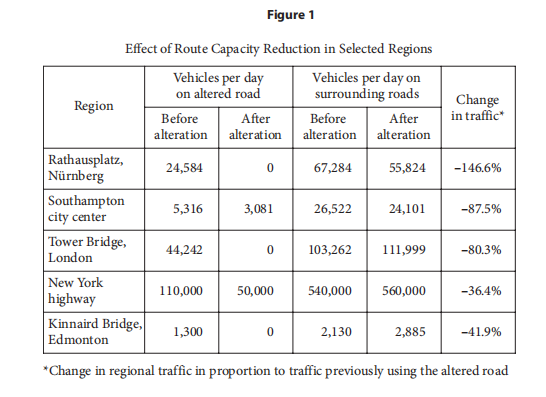
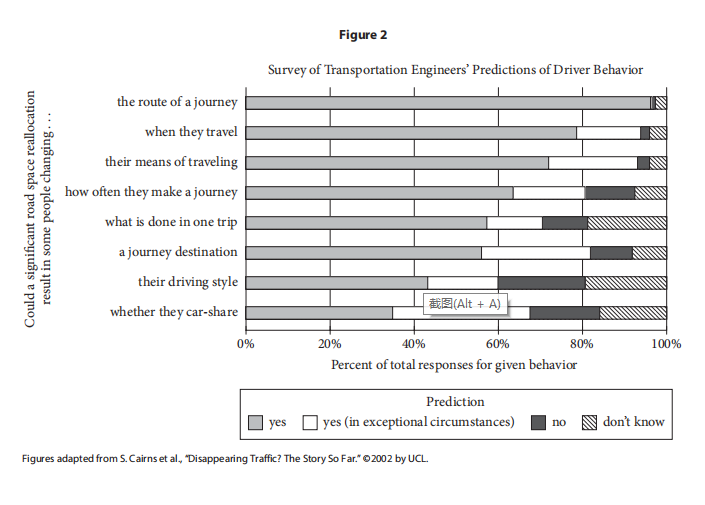
This passage is adapted from David Owen, The Conundrum:How Scientific Innovation, Increased Efficiency, and GoodIntentions Can Make Our Energy and Climate Problems Worse.©2011 by David Owen.Building good transit isn’t a bad idea, but it canactually backfire if the new trains and buses merelyclear space on highway lanes for those who wouldLine prefer to drive—a group that, historically, has included almost everyone with access to a car. Tohave environmental value, new transit has to replaceand eliminate driving on a scale sufficient to cutenergy consumption overall. That means that a newtransit system has to be backed up by something that impels complementary reductions in car use—say,the physical elimination of traffic lanes or theconversion of existing roadways into bike or buslanes, ideally in combination with higher fuel taxes,parking fees, and tolls. Needless to say, those ideas are not popular. But they’re necessary, because youcan’t make people drive less, in the long run, bytaking steps that make driving more pleasant,economical, and productive.One of the few forces with a proven ability to slow the growth of suburban sprawl has been theultimately finite tolerance of commuters for long,annoying commutes. That tolerance has grown inrecent decades, and not just in the United States, butit isn’t unlimited, and even people who don’t seem to mind spending half their day in a car eventuallyreach a point where, finally, enough is enough. Thatmeans that traffic congestion can haveenvironmental value, since it lengthens commutingtimes and, by doing so, discourages the proliferation of still more energy-hungry subdivisions—unless wemade the congestion go away. If, in a misguidedeffort to do something of environmental value,municipalities take steps that make long-distance carcommuting faster or more convenient—by adding lanes, building bypasses, employing traffic-controlmeasures that make it possible for existing roads toaccommodate more cars with fewer delays, replacingtollbooths with radio-based systems that don’trequire drivers even to slow down—we actually make the sprawl problem worse, by indirectly encouragingpeople to live still farther from their jobs, stores,schools, and doctors’ offices, and by forcingmunicipalities to further extend road networks,power grids, water lines, and other civic infrastructure. If you cut commuting time by10 percent, people who now drive fifty miles eachway to work can justify moving five miles farther out,because their travel time won’t change. This is howmetropolitan areas metastasize. It’s the history of suburban expansion.Traffic congestion isn’t an environmentalproblem; traffic is. Relieving congestion withoutdoing anything to reduce the total volume of cars canonly make the real problem worse. Highway engineers have known for a long time that buildingnew car lanes reduces congestion only temporarily,because the new lanes foster additional driving—aphenomenon called induced traffic. Widening roadsmakes traffic move faster in the short term, but the improved conditions eventually attract additionaldrivers and entice current drivers to drive more, andcongestion reappears, but with more cars—and thatgets people thinking about widening roads again.Moving drivers out of cars and into other forms oftransportation can have the same effect, if existingtraffic lanes are kept in service: road space begetsroad use.One of the arguments that cities inevitably makein promoting transit plans is that the new system, by relieving automobile congestion, will improve thelives of those who continue to drive. No one everpromotes a transit scheme by arguing that it wouldmake traveling less convenient—even though, froman environmental perspective, inconvenient travel is a worthy goal.