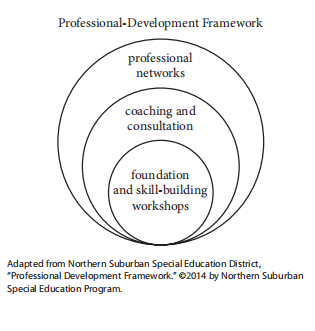
Professional Development: A Shared ResponsibilityNew theories, (12) new practices too, andtechnologies are transforming the twenty-first-centuryworkplace at lightning speed. To perform their jobssuccessfully in this dynamic environment, workers inmany (13) fields—from social services to manufacturing,must continually acquire relevant knowledge and updatekey skills. This practice of continued education, alsoknown as professional development, benefits not onlyemployees but also their employers. (14) Accordingly,meaningful professional development is a sharedresponsibility: it is the responsibility of employers toprovide useful programs, and it is also the responsibilityof employees to take advantage of the opportunitiesoffered to them.Critics of employer-provided professionaldevelopment argue that employees (15) might consider apopular career path. If employees find themselves fallingbehind in the workplace, these critics (16) contend. Thenit is the duty of those employees to identify, and even pay for, appropriate resources to (17) show them how andwhy they are falling behind and what they should doabout it. This argument ignores research pointing tohigh employee turnover and training of new staff assignificant costs plaguing employers in many fields.Forward-thinking employers recognize the importance ofinvesting in the employees they have rather than hiringnew staff when the skills of current workers (18) get oldand worn out. The most common forms of professionaldevelopment provided to employees (19) includescoaching, mentoring, technical assistance, andworkshops. Some employers utilize several approachessimultaneously, developing a framework that suits theparticular needs of their employees. (20) Around the sametime, the figure illustrates a simple yet comprehensiveprofessional-development model created for specialeducation personnel. As the figure suggests, (21) receivingcoaching and consultation is the overarching framework,while the opportunity to belong to professional networksand participate in activities such as foundation andskill-building workshops is relatively unimportant. A recent trend in professional development that hasprovided advantages to both employers and employees isonline instruction. From an employer perspective, thefirst and perhaps most obvious advantage is the lowercost of online professional development compared withthat of in-person workshops and training. Employers canalso (22) identify, which employees have successfullycompleted instructional modules and which need to beoffered additional training. For employees, onlineprofessional development provides the opportunity toreceive instruction at their own pace and interact withother professionals online. This exciting trend has thepotential to make the shared responsibility ofprofessional development less burdensome for bothemployers and employees.