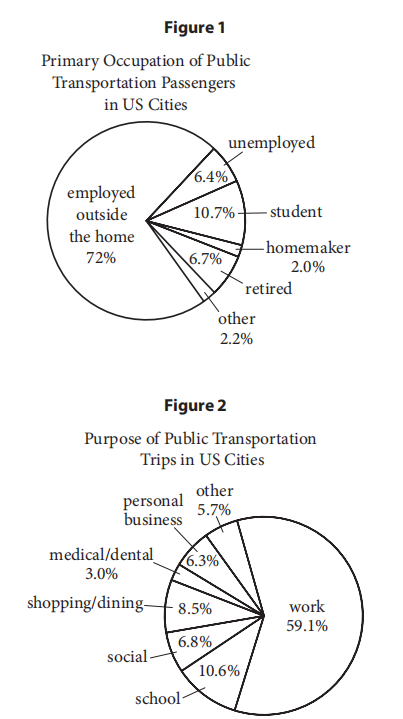
Saving Our Cities and Ourselves from the Automobile. ©2012by Taras Grescoe.Though there are 600 million cars on the planet,and counting, there are also seven billion people,which means that for the vast majority of us gettingaround involves taking buses, ferryboats, commutertrains, streetcars, and subways. In other words,traveling to work, school, or the market means beinga straphanger: somebody who, by choice or necessity,relies on public transport, rather than a privatelyowned automobile.Half the population of New York, Toronto, andLondon do not own cars. Public transport is howmost of the people of Asia and Africa, the world’smost populous continents, travel. Every day, subwaysystems carry 155 million passengers, thirty-fourtimes the number carried by all the world’s airplanes,and the global public transport market is now valuedat $428 billion annually. A century and a half afterthe invention of the internal combustion engine,private car ownership is still an anomaly.And yet public transportation, in many minds, isthe opposite of glamour—a squalid last resort forthose with one too many impaired driving charges,too poor to afford insurance, or too decrepit to getbehind the wheel of a car. In much of NorthAmerica, they are right: taking transit is a depressingexperience. Anybody who has waited far too long ona street corner for the privilege of boarding alurching, overcrowded bus, or wrestled luggage ontosubways and shuttles to get to a big city airport,knows that transit on this continent tends to beunderfunded, ill-maintained, and ill-planned. Giventhe opportunity, who wouldn’t drive? Hopping in acar almost always gets you to your destination morequickly.It doesn’t have to be like this. Done right, publictransport can be faster, more comfortable, andcheaper than the private automobile. In Shanghai,German-made magnetic levitation trains skim overelevated tracks at 266 miles an hour, whisking peopleto the airport at a third of the speed of sound. Inprovincial French towns, electric-powered streetcarsrun silently on rubber tires, sliding through narrowstreets along a single guide rail set into cobblestones.From Spain to Sweden, Wi-Fi equipped high-speedtrains seamlessly connect with highly ramified metronetworks, allowing commuters to work on laptops asthey prepare for same-day meetings in once distantcapital cities. In Latin America, China, and India,working people board fast-loading buses that movelike subway trains along dedicated busways, leavingthe sedans and SUVs of the rich mired indawn-to-dusk traffic jams. And some cities havetransformed their streets into cycle-path freeways,making giant strides in public health and safety andthe sheer livability of their neighborhoods—in theprocess turning the workaday bicycle into a viableform of mass transit.If you credit the demographers, this transit trendhas legs. The “Millenials,” who reached adulthoodaround the turn of the century and now outnumberbaby boomers, tend to favor cities over suburbs, andare far more willing than their parents to ride busesand subways. Part of the reason is their ease withiPads, MP3 players, Kindles, and smartphones: youcan get some serious texting done when you’re notdriving, and earbuds offer effective insulation fromall but the most extreme commuting annoyances.Even though there are more teenagers in the countrythan ever, only ten million have a driver’s license(versus twelve million a generation ago). Babyboomers may have been raised in Leave It to Beaversuburbs, but as they retire, a significant contingent isfavoring older cities and compact towns where theyhave the option of walking and riding bikes. Seniors,too, are more likely to use transit, and by 2025, therewill be 64 million Americans over the age ofsixty-five. Already, dwellings in older neighborhoodsin Washington, D.C., Atlanta, and Denver, especiallythose near light-rail or subway stations, arecommanding enormous price premiums oversuburban homes. The experience of European andAsian cities shows that if you make buses, subways,and trains convenient, comfortable, fast, and safe, asurprisingly large percentage of citizens will opt toride rather than drive.Figure 1 and figure 2 are adapted from the American Public
Transportation Association, “A·Profile of Public Transportation Passenger Demographics and Travel Characteristics Reported in On-Board Surveys.” ©2007 by American Public Transportation Association.
What function does the third paragraph (lines 20-34) serve in the passage as a whole?
